Resource Management in Procurement and Sourcing
Learning Outcomes – Resource Management in Procurement and Sourcing
Participants who successfully complete this training will be able to:
Understand the role of strategic resource use
Explain that procurement and sourcing are not merely operational activities but strategic functions that create organizational value.
Analyze the difference between price and value
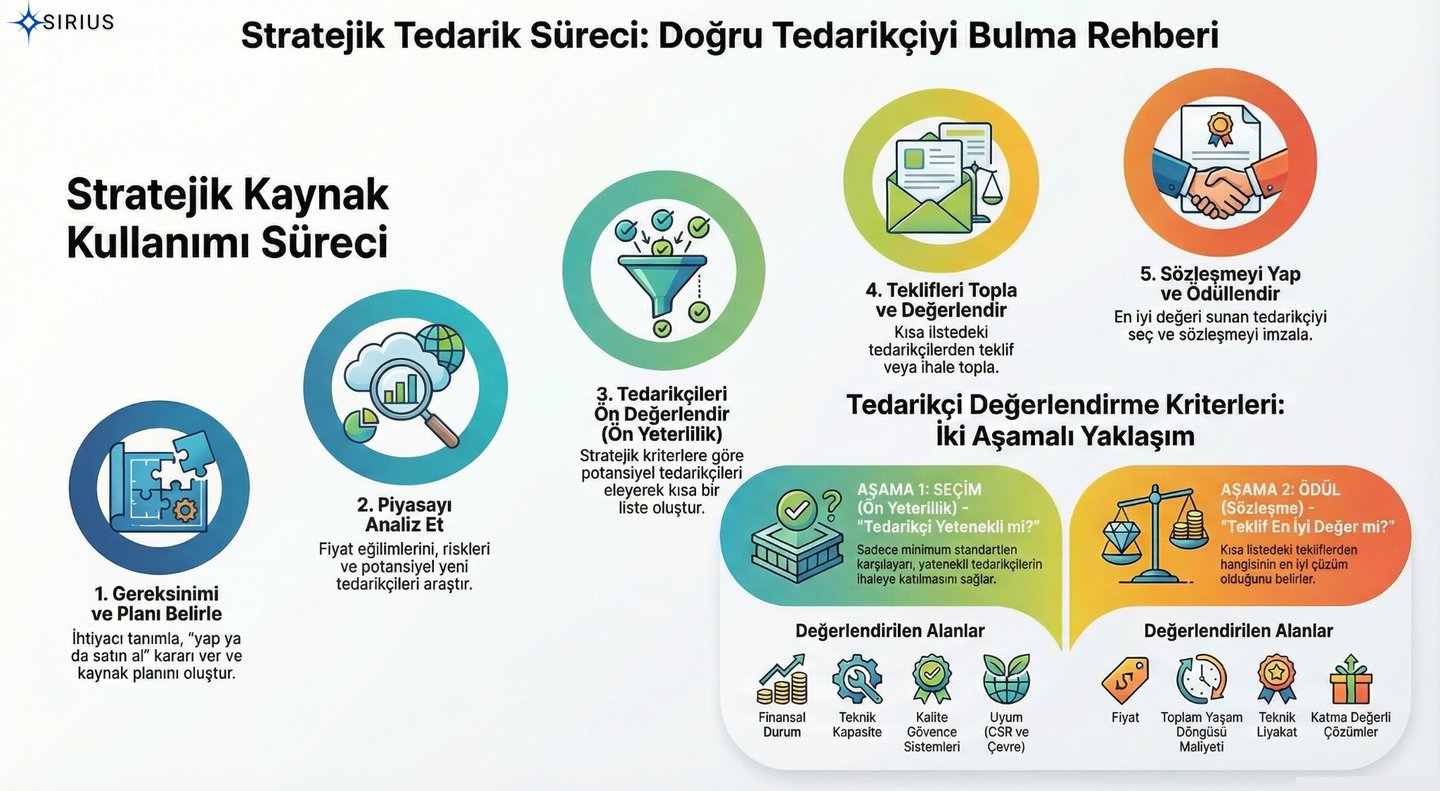
Determine the best value based on Total Cost of Ownership (TCO) and MEAT criteria, rather than focusing solely on the lowest price.
Distinguish public, private, and international procurement contexts
Assess how legal, regulatory, and organizational requirements in different sectors affect sourcing processes.
Explain public sector procurement processes and tender mechanisms
Identify key legal frameworks, tender types, timelines, and contract award criteria used in public procurement.
Manage international sourcing processes
Apply customs, logistics, import documentation, Incoterms, and applicable law correctly in global procurement.
Evaluate financial risks in international trade
Identify foreign exchange risks and apply basic hedging techniques.
Analyze operational and political risks in international sourcing
Detect supply disruptions, logistics delays, and regulatory risks, and develop preventive actions.
Apply ethical and sustainable sourcing practices
Explain the importance of ethical procurement, fair trade, and social responsibility in global supply chains.
Manage cross-cultural supply chains
Assess the impact of cultural differences on negotiation, communication, and decision-making, and adopt suitable management approaches.
Compare different contracting approaches
Determine when to use direct negotiation, competitive tendering, or bargaining methods.
Apply negotiation strategies effectively
Differentiate between distributive and integrative negotiation approaches and select the strategy that fits the situation.
Evaluate the impact of process discipline on procurement performance
Explain how systematic processes, objective criteria, and governance mechanisms contribute to consistent results.
Develop risk-based and value-driven decision-making skills
Make balanced and sustainable sourcing decisions by considering financial, operational, and ethical dimensions together.