
Procurement and Supply Chain Resilience in Light of the Suez Canal Crisis
One Canal Closed, the World Stood Still
2/3/20222 min read

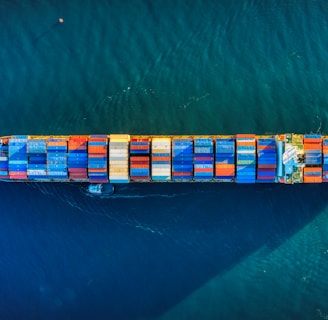
The temporary closure of the Suez Canal, while seemingly an unexpected event in terms of global trade, in fact served as a stress test that clearly revealed how delicately balanced modern supply chains truly are. This incident demonstrated unequivocally that procurement and supply chain management are not merely operational functions, but critical pillars that directly influence business continuity, competitiveness, and strategic resilience.
The fact that approximately twelve percent of global trade depends on a single transit point exposed just how fragile supply chains designed primarily around cost optimization can be. With the closure of the Suez Canal, it was not only shipments that were delayed; production plans, inventory policies, customer commitments, and financial forecasts were simultaneously put at risk. This clearly highlighted the enterprise-wide impact of procurement decisions.
From a strategic perspective, the crisis showed that the true value of procurement contracts is only fully understood in moments of uncertainty. Force majeure clauses, Incoterms, and risk-sharing mechanisms moved beyond theoretical provisions and were tested in real time. This experience underscored that procurement contracts should not merely regulate commercial terms, but also function as strategic instruments for managing crisis scenarios.
One of the most important takeaways from the Suez Crisis was the realization that a “lowest-cost sourcing” approach alone is not a sustainable strategy. Structures dependent on a single source, a single country, or a single logistics route faced severe operational disruptions despite their cost advantages. In contrast, organizations with diversified supplier networks, geographical flexibility, and adaptable logistics models were able to manage the crisis with a controllable increase in costs. This confirmed at a strategic level that the primary objective of procurement is not only to reduce costs, but to safeguard business continuity.
The crisis also highlighted the critical importance of supply chain visibility. Many organizations realized that they lacked sufficient insight beyond their tier-one suppliers. Yet, the true vulnerabilities of supply chains often lie in deeper tiers; disruptions at any point, from raw materials to logistics, can affect the entire system. In this context, the role of procurement must be redefined not only as supplier management, but as end-to-end risk mapping across the value chain.
Viewed through a strategic lens, the Suez Canal crisis also transformed the role of the procurement manager. Procurement is no longer merely a function that negotiates prices; it has become a capability that develops scenarios, conducts risk analyses, designs alternative flows, and provides strategic foresight to senior management. Geographic dependencies, political risks, climate-related disruptions, and logistics bottlenecks must now be treated as integral components of procurement strategy.
In conclusion, while the reopening of the Suez Canal restored the flow of trade to normal, the structural realities revealed by the incident remain valid. Resilient supply chains do not emerge by chance; they are built through deliberate procurement strategies, multi-sourcing structures, and risk-based decision-making processes. In this context, the procurement function is a strategic hub that shapes not only a company’s cost structure, but also its level of resilience to crises.
The fact that global trade nearly came to a standstill due to the closure of a single canal clearly defines the position of procurement within organizations. Procurement is no longer a support function, it is an integral part of corporate strategy.